
How Did I Survive? Truth, Strength, and Walter Cronkite

I grew up listening to Walter Cronkite. He signed off each nightly newscast with “And that’s the way it is.” As a kid, I was often alarmed by the news. But I reasoned that if Walter Cronkite respected me enough to tell me the truth, then I could...


I grew up listening to Walter Cronkite. He signed off each nightly newscast with “And that’s the way it is.” As a kid, I was often alarmed by the news. But I reasoned that if Walter Cronkite respected me enough to tell me the truth, then I could handle it. Yes, my reasoning was flawed. Mr. Cronkite didn’t know me.
In this episode, I share deeply personal stories from my childhood. That's when my first caregiving experience really began. Both of my parents had enough confidence in me to tell me the truth, even at five years old.
Still, decades later, Mr. Cronkite's respect and my parents' confidence helped me find the resilience I needed to care for my husband. He had Alzheimer’s. Today’s family dementia caregivers need someone who respects them enough to tell them the truth. Caregivers need the truth to make a plan -- for minimize the chances of falling, to recognize what might be a urinary tract infection (UTI), to serve food not likely to cause choking, to adjust the household budget to hire a CNA (Certified Nursing Assistant), to ask the hard questions about the real costs of memory care facilities. Sometimes, we can plan only one step at a time. But one step IS progress.
I hope that in hearing my childhood story, other caregivers will be able to look into their pasts and recognize times when they found strength. Now is the time to draw on that strength. We need to survive.
Are you caring for a spouse with dementia? Have you written a book about dementia? Please let me know. I'd love to speak with you. Send an email to: zita@myspousehasdementia.com
I grew up listening to Walter Cronkite. He signed off each nightly newscast with, "And that's the way it is."
As a kid, I was often alarmed by the news. But I reasoned that if Walter Cronkite respected me enough to tell me the truth, then I could handle it. Yes, my reasoning was flawed.
Mr. Cronkite didn't know me. Still, decades later, that respect helped me find the resilience I needed to care for my husband. He had Alzheimer's.
Today's family dementia caregivers need someone who respects them enough to tell them the truth. It might help the caregiver find needed strength. Truth and strength and Walter Cronkite.
And that's what this episode, number 24, is all about. You're listening to My Spouse Has Dementia, a podcast that uses personal stories, occasional interviews, and simple rituals to support dementia caregiving spouses.
Because approximately 40 percent of us die first. I'm Zita Christian, writer, widow. For years now, I've thought of caring for my husband as my first caregiving experience.
But not long ago, I realized that that's not accurate. I had my first experience of caregiving when I was six, almost. I had a younger sister who was three, almost.
Our mom was in the big Naval Hospital on the base in Portsmouth, Virginia. She had just given birth to our baby sister. It was mid-May, 1953.
Something went wrong in the hospital. By the end of June, our mom had received the last rites three times. In the Catholic Church, a priest performs that sacrament when a person is about to die.
Our grandmother came to stay with us. Sometime during the summer, she went back to her house in Pennsylvania, and she took our new baby sister with her.
In the Navy, our dad held the rank of chief and was in charge of the hospital pharmacy. When it was clear that our mom wasn't coming home right away, he recruited a young Navy couple to move into our house so the wife could take care of my sister and me until our mom came home.
One afternoon in late June, my dad drove home from the hospital. He got out of the car and called me over. I was playing in the front yard with kids from the neighborhood.
He said he had something important to tell me. I leaned against dad's brown Nash Rambler. I remember I flinched when the backs of my bare legs touched the hot metal.
I remember his voice sounded odd when he said, "Your mother is not going to live through the night. You'll have to be the mother now."
I didn't know how to process the news that my mom was going to die that night, and I certainly didn't know how to be a mother. "You can go back to your friends now," my dad said.
I don't remember what I did in that moment. Did I rejoin my friends? Did I go up to my room? I don't know.
I do know that I took my new responsibilities seriously, so I started bossing my sister around. On Christmas Day, an ambulance pulled up in front of our house. Two orderlies wheeled mom in on a stretcher.
By that time, I was six, my sister three. Hospital rules prohibited visitors under twelve. We hadn't seen our mom since May.
We were excited to the point of tears. I didn't care that she looked like a skeleton. I just wanted her to come home.
I wanted life to be the way it used to be. But nothing was the way it used to be. Mom was on a stretcher.
What looked like a coat stand on wheels was next to her bed. A bag of liquid hung from a hook, with a tube that ran from the bag to mom's arm. From under the blanket, I could see another tube coming from her right side.
Mom explained that she had to go back to the hospital in a few hours because the doctors were still working on her. But we shouldn't worry. She was getting stronger and stronger every day.
Saying goodbye that afternoon was hard for me and my sister. It was hard for our dad, too. I don't know if he was inspired to arrange for the visit, or if mom said that's the only thing she wanted for Christmas.
In the spring of 1954, a year after giving birth to our baby sister, mom finally did come home. I remember dad helping her walk up the two steps to our front door.
Her right leg was trapped in a metal cage, held in place with thick straps of dark brown leather and clunky metal buckles. Another year went by, and our baby sister also came home. By then, she was two years old.
Mom was still wearing that heavy leg cage, and then one day, she took it off. She hung it on one of the coat hooks in the stairwell, leading upstairs to where my sister and I slept. I saw it at least twice every day.
Mom's health steadily improved, but never to what was normal for a woman of 32. She didn't look the way she did when she first went into the hospital. Her long, wavy chestnut hair, always so shiny, was gone.
Now, it was gray and dry like hay. I overheard a neighbor say something about my mom having her womanly parts tied up. One of the neighbor boys told me she looked like a witch. I screamed at him and told him to go to hell. That was the first time I used a swear word. It was the worst one I knew.
Mom taught me to cook. Nothing fancy. Just enough to put a meal on the table. She was often tired. She slept a lot. She also cut off her hair.
One day I asked if it was true that her womanly parts had been tied up. And what were womanly parts? She explained that she had to have an operation that would stop her from having more babies.
She led me into the bathroom. She took off her cotton blouse. She had on a plain white bra, with circles of stitching on the cups.
Skin stitches ran all across her belly. There was a hole in her right side. She explained the hole was for the drain she needed for a while.
I stared at it. Go ahead, she said, you can touch it.
I swallowed a squeamish feeling and poked my finger into the hole. It wasn't deep, but it was there. I studied the U-shaped pipe under the sink and asked why she needed to drain.
She went to the linen closet and pulled down a glass jelly jar from the top shelf. It was about half full of small stones, pebbles. She explained they came from her kidney, the one she still had.
The doctor cut out the other one a few days after my baby sister was born. The kidney is supposed to be about the size of a fist. The kidney the doctor got rid of was the size of a football, and it was solid rock.
She said the doctors needed to monitor how many stones the remaining kidney was producing. I asked if the stones came out of the hole in her side. Yes, she said, for a while.
Now the stones come out when she pees. She pees into a sieve, so that it will collect the stones. I asked if it hurt when the stones came out.
She nodded, yes, it hurts a lot. She explained that the pain makes her tired, and that's why she needs so much rest.
It scared me to think my mom had pain, but I was glad she told me the truth. I reasoned she knew I could handle it, like Walter Cronkite knew.
My dad understood too. That's when we got a telephone.
It was for emergency use only. My dad taught me how to dial the numbers. On the side of the phone, he taped the phone number for the hospital pharmacy, where I could reach him.
We were the first family on our street to have a telephone in the house. There was a phone booth about a mile away in front of a little family owned grocery store, and another phone booth a little farther away.
I don't remember it's being next to anything. One day, my sister and I walked with mom to the isolated phone booth. Mom carried our baby sister in her arms.
The whole way, mom was quiet, very quiet. I held my baby sister while mom went into the booth and dropped coins into the slots. A few minutes later, we all headed back home.
Along the way, mom stumbled several times. At one point, she handed my baby sister to me. Mom's face was squeezed up.
I could tell she was clenching her teeth, something I was not supposed to do. Once we got inside the house, she collapsed on the bed. Dad arrived a few minutes later and brought mom back to the hospital.
She stayed there for several days and then came home. That turned into a pattern I came to expect. Seven years passed.
Several times my dad went out to sea. Several times my mom went to the hospital, never for more than a few days. She didn't drive, so one of our neighbors would bring her to and from the hospital.
Then came 1962, October. My birthday was the next month, but I couldn't think about that while Mr. Cronkite reported on what was being called the Cuban Missile Crisis.
You see, the Soviet Union had placed nuclear missiles on Cuba and aimed them at the United States. President Kennedy said that we could be on the brink of nuclear war. One of the other Navy wives and her husband came to talk to my mom.
It was almost midnight when they left. If my mom wanted to leave town, their son would drive our car and we'd all travel together. Mom thought about it a lot and decided we would stay.
In a letter to my dad, she reasoned, our friends are all here. Hospital facilities are better. I'm prepared to fight full out right here at home, where things are familiar.
A few days later, another Navy wife came by. She brought some civil defense booklets. She and her husband were also willing to help us evacuate if we decided to leave.
Speaking of that Navy wife, my mom wrote to my dad saying, she gets too shook up for me to have too much confidence in her.
She was telling all of us women who were alone that we should get a gun and carry it for protection because in an emergency, people will panic and take your cars.
Well, maybe I'm square as a box, but I'd like to believe that in a crisis, people would go out of their way to help each other. It would be hell trying to stay alive in a world or a town where it was dog eat dog, so I'm not getting gun happy.
Instead of evacuating, mom directed me and my sisters to fill the closet under the stairs with food, water, blankets, bandages, medicine, flashlights, fresh batteries, the transistor radio my dad had given her for Christmas the year before, one stuffed animal each, and our rosaries.
Once a week, we'd all get into the closet, turn off the light and shut the door and be still for 20 minutes. So we'd know what to expect. And we watched Walter Cronkite.
We saw the photos of the Navy ships surrounding the island of Cuba. My dad was on one of those ships. He was a corpsman, a pharmacist, and now an E9 Master Chief.
For the last two years, he'd been on some kind of special assignment with the Marines in Camp Lejeune, North Carolina. He said it was a secret and couldn't talk about it.
When Mr. Cronkite said, "And that's the way it is," I knew we were facing something awful. But at least I knew the truth. I could handle it.
Six days after the Navy set up the blockade, Nikita Khrushchev-- he was ahead of the Communist Party--ordered the missiles to be removed. We weren't going to have a nuclear war.
During the time my dad had been at Camp Lejeune, he and three other men from the hospital who were also on the special assignment would get liberty and come home Friday evening, go back Sunday afternoon. Not every weekend, but most.
Nine months after the missile crisis, on a Friday night in July of 1963, my dad came home for good. On Monday, he was to report for duty back at the Naval Hospital. The crisis was over.
But on Saturday morning, my mother had a heart attack. Two weeks later, she died. And that's the way it was.
Four months later, President Kennedy was assassinated. The history that unfolded out in the world and inside my childhood home forced me to be strong, taught me to be resilient. I developed optimism as a coping skill.
Decades later, caring for my husband weakened my strength, chipped away at my resilience, and turned optimism into a curse. But I survived. I'm telling you this very personal story for two reasons.
Number one, more than a few people have commented on how strong I am. I am strong. When you're a kid and you don't know that you can't do something, you do it, or at least I did.
So I invite you to look back at your childhood. What obstacles did you face? How did you overcome them?
Who helped you? Who did you admire? And why?
What did facing the obstacle teach you about yourself? Now, please understand, I am not a psychologist, not a counselor, not a medical professional of any kind. I'm a woman who learned as a kid how to be strong.
My hope is that when you look into the stories of your past, you'll find a chapter or two that reveal your inner strength. Draw on that strength now.
And number two, the second reason I'm sharing this very personal story, is because I believe that whatever situation we're in, it's better to know the truth than to pretend that everything's fine.
As I've mentioned before, about 40% of family dementia caregivers die first. I credit a large part of my survival to three people who always told me the truth. I've talked about all three of them before.
Number one is Amanda. Amanda was the social worker in the neurologist's office. She always told me the truth about the progression of Alzheimer's.
No drama, no false hope. She told me about trial programs for new drugs. She gave me a form to apply for a stipend that would at least cover the cost for a few days of a home health aid.
She sent me links for online conferences about caregiving. She started an in-person support group, so the caregivers could hear firsthand from other caregivers and know what they experienced.
When the time came, she made the arrangements for palliative care and hospice. Amanda prepared me for what might and what would happen. So when the day came that Dick didn't know who I was, I didn't get upset.
Instead, I said, "I'm your wife, and I love you." Months later, when he said, "You seem like a nice woman. Are you married?" I didn't get upset. Instead, I said, "Yes. And my husband is the most wonderful man in the world. He's just like you."
When he talked to himself in the bathroom mirror, gestured toward me saying, "That old woman's here," I didn't react. No, that's not true. I laughed.
When the really bad nightmares came, and he morphed into a wide-eyed monster and yelled, "Get out of here or someone's going to get killed!" I locked myself in the guest bedroom and called Amanda in the morning.
The number two person, that's Misty, the APRN who left the neurologist's office to open her own practice. Her stepfather was in the middle of the Alzheimer's journey.
Misty saw what her mom was going through and understood my emotional trauma. Like Amanda, Misty always told me the truth about where Dick was in the progression of the disease. No drama, no false hope.
In March of 2021, I told Misty that I had learned just two days earlier that Dick and I would have to leave our home in June.
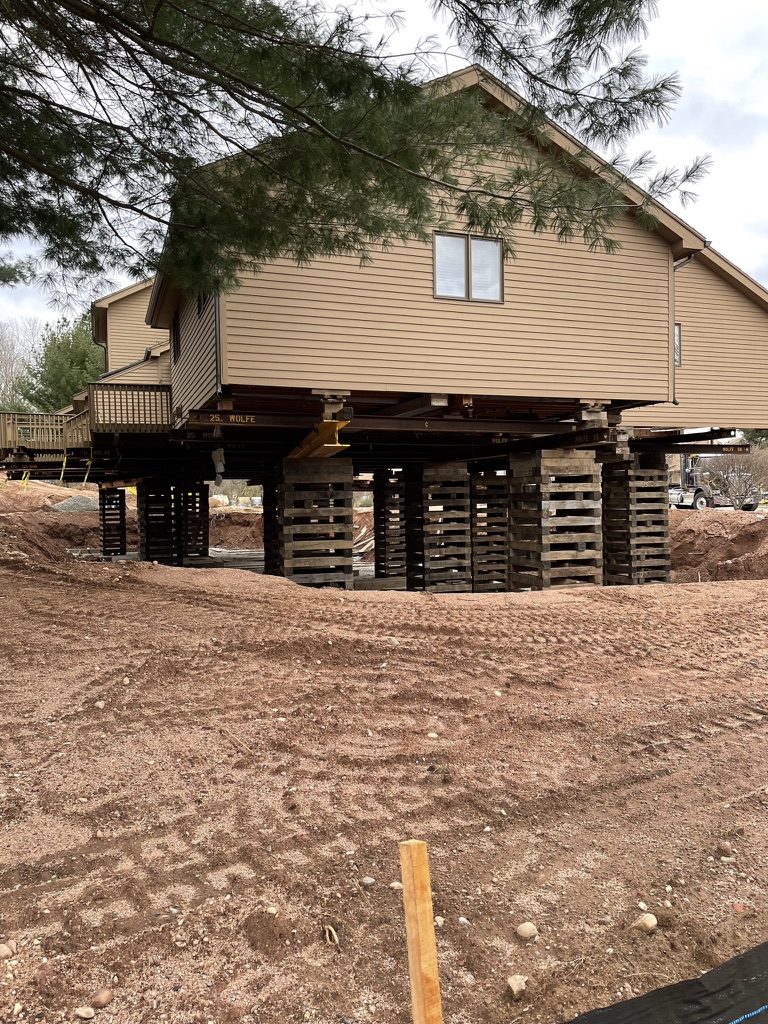 Everyone in our condominium would have to vacate for five months, while the crumbling foundation of our whole building was removed and replaced. Our daughter and her family opened their home to us. They lived 90 minutes away.
I remember lamenting to Misty that our building wasn't scheduled for that repair until 2022, but the construction crew had an opening, and our building was moved up a year.
In the next three months, I would have to empty 36 years of stuff from the basement and the garage and put it all in the living room. I wasn't ready. Misty helped me make a plan to minimize the disruption for Dick.
Changes in routine can trigger all sorts of problems for someone with Alzheimer's. And then Misty said, "Be grateful, Zita. At the rate, Dick is declining, if you tried to move next year, he would never survive."
Number three is our family doctor. By the time Dick was diagnosed with Alzheimer's, we had been seeing our family doctor for at least 25, maybe 30 years. He knows us.
At one of our appointments, he drew a graph to illustrate how Alzheimer's would cause a steady decline in symptoms over several years. Two, three, five, maybe more.
And how one day the steady decline would become a sharp drop. The number and severity of symptoms would increase dramatically.
He added that since people are different and not everyone with Alzheimer's displays all of the symptoms, it would be impossible to predict how Dick would be affected. That said, on average, a person lives six years after the diagnosis of Alzheimer's.
He added that the most common causes of death for a person with Alzheimer's are infections mostly from a UTI, falling, and choking. I knew that our doctor was one of the physicians on call at a memory care facility nearby.
I told him that friends, family, and other members of Dick's medical team had encouraged me to look into moving him to such a place.
The facility in question had apartments for couples like Dick and me, so we could stay together, and help would be just a buzzer away, and that sounded pretty good.
That's when our doctor pointed out that Dick was almost nine years older than I was, and that my health was that of a woman ten years younger than I am.
He urged me to consider the financial implications of moving into an apartment at a memory care facility.
As the dementia progresses, the spouse with dementia winds up being moved into a locked area for patients who require additional care at an additional expense. I wouldn't be able to move with him.
Whether or not the healthy spouse can stay in the apartment might be up to the facility. Oftentimes, what happens is the healthy spouse has to leave. That means buying or renting a place to live.
All too often, the healthy spouse loses everything and has to declare bankruptcy. I listened and felt a pit in my stomach. At the same time, I was grateful.
With knowledge, I could make a plan. How could I adjust the household budget to afford a CNA for at least a few hours a week? What modifications would I need to make at home to reduce the chance that Dick would fall?
What could he eat that wouldn't create a choking hazard? I have a sister in Florida. I could ask her to research medical equipment.
I have a sister in Virginia. Her husband died at home a few years ago. He had cancer. What tips could she give me to manage comfort and hygiene?
Which neighbors could I call on to help? What paper items and cleaning products should I buy in bulk?
The point is, I needed to reach out, get information, ask hard questions, speak up, and do everything I could to take care of my husband at home.
I remember the night. Oh, this was years before Alzheimer's came into the picture. I took Dick to the emergency room. He was in horrible pain. Turned out he had gallstones.
The doctors gave him pain meds and scheduled surgery for 7 a.m. The next morning, the surgeon came to talk to Dick. Dick was on a stretcher in the hallway.
I was standing next to him. Several other patients were also on stretchers in the hallway. The surgeon, Dr. Anderson, asked Dick if he had any questions. Dick said no.
The doctor turned to me. Did I have any questions? Yes. Oh, yes, I did! Did you drink any alcohol last night? Do you take any drugs? How much sleep did you get last night?
Poor Dick. He gave such an apologetic look to the doctor, and then he said to me, "Honey, don't say that."
I stared at the doctor and waited.
Dr. Anderson said, "No, Mrs. Christian, I did not drink alcohol last night. I do not take drugs. And I got a good eight hours of sleep. Then he patted Dick's arm, smiled, and said, "Your wife loves you."
In this dementia journey you're on, has your spouse seen a gerontologist, a neurologist, a speech therapist, to help avoid choking, an occupational therapist, a physical therapist, an ophthalmologist because of vision changes, a psychologist, a social worker, a pharmacist.
In any of those appointments, if you had questions, did you ask them? Did you get answers? Did you understand the answers?
My friend, if you don't already speak up, start now. You might not like what you hear, but you'll be able to plan your next step.
As you well know, in caring for a spouse with dementia, there are times when we can't take more than one step. But one step is progress, and that's the way it is.
If you know someone who is caring for a spouse with Alzheimer's or other form of dementia, please tell that person about this podcast.
If you or that person would like to leave a voicemail for me, and gosh, I hope you do, go to the website myspousehasdementia.com. On the right side, you'll see a small vertical purple bar with a little microphone symbol. Just press the bar. You'll have two minutes to leave a message.
If you prefer to write, send an email. Write to zita@myspousehasdementia.com. I don't have an assistant. No one sees my email but me.
And in the meantime, when I say take good care of yourself, those words aren't fluffy. They're fierce. Because we need to survive.
Thank you for listening. All the way to the end.


